HVAC energy optimization, baselined against weather and verified at the meter
HVAC energy optimization reduces the energy heating, cooling and ventilation use without losing comfort. Aqueduct baselines HVAC consumption against weather, finds faults and schedule waste, adjusts setpoints and schedules where control is enabled with owner approval, and verifies each saving at the meter against the weather-normalized baseline.
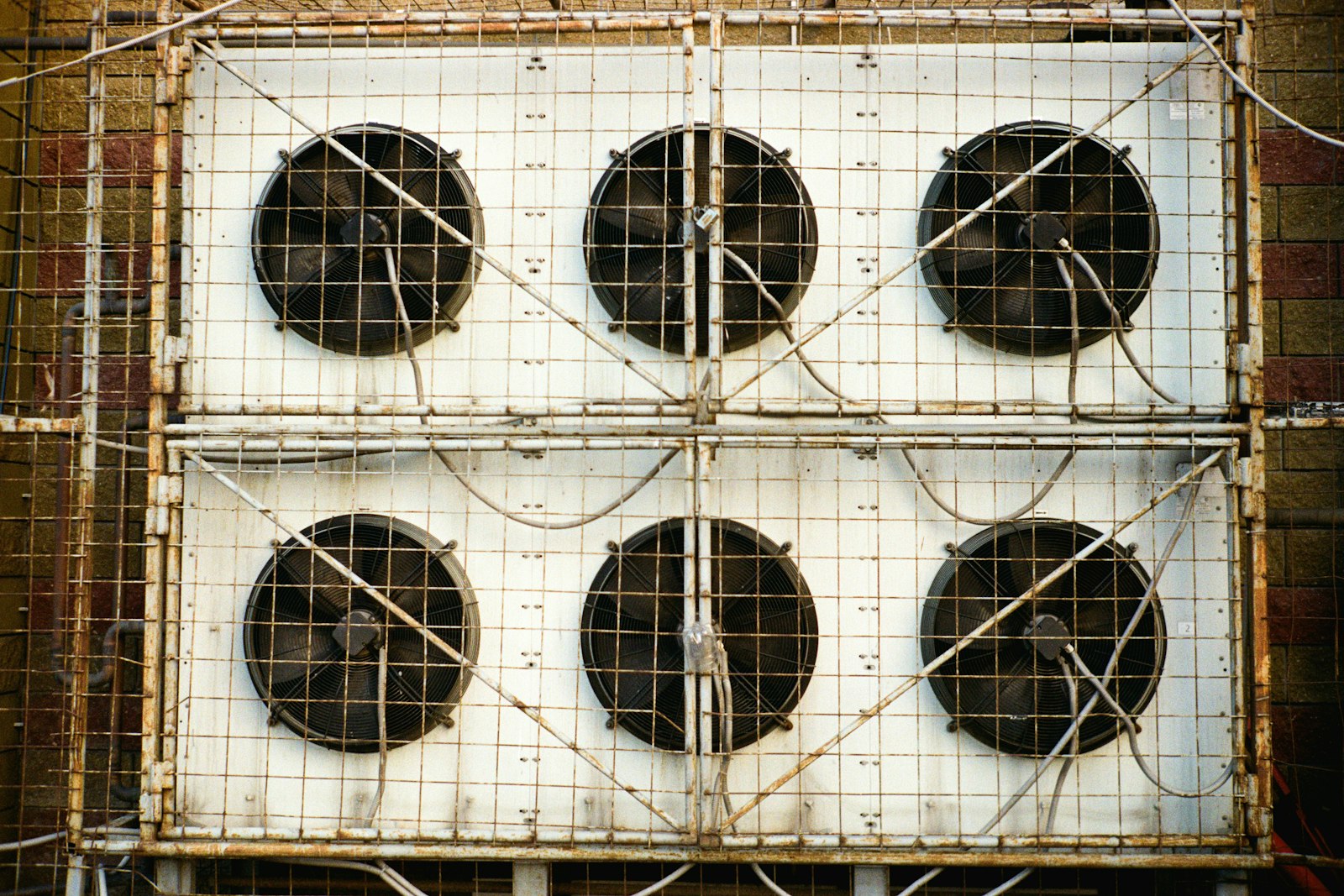
Cut HVAC waste without cutting comfort, and prove the saving at the meter.
HVAC energy compared with what the weather demands
- Degree-day regression
Usage regressed on cooling and heating degree days gives an expected value for every period.
- Per unit and per feeder
HVAC feeders and units are separated, so the wasteful one stands out.
- Day-one results
Uploading 6 to 12 months of bills sets the baseline before new metering is installed.
Faults and schedules that burn energy quietly
- Component states
The RTU twin shows economizer, cooling, heating and fans as components, not raw points.
- Control quality KPIs
Setpoint attainment, comfort compliance and sequence exceptions show where control is slipping.
- Plain-language cause
Each finding names the failing component, the evidence behind it and a recommended fix in plain language.
Changes made with approval, savings measured
- Schedules and setpoints
Adjusted where control is enabled, with owner approval and lockouts against short cycling.
- Command history
Every command and its result are recorded, so controls claims stand up to M&V and procurement review.
- Verified saving
HVAC energy is measured below baseline after the change, and the saving is priced from your own rates.
HVAC energy, before and after Aqueduct
- Units run to schedules nobody has checked in years.
- A stuck economizer wastes energy for months.
- A hot month hides whether the plant got worse.
- Panel overrides stay in place indefinitely.
- Retrofit savings come from the vendor's proposal.
 The Aqueduct way
- Schedules follow occupancy where control is enabled.
- The RTU twin flags the stuck economizer.
- Degree-day baselines separate weather from waste.
- Command history shows every change and its result.
- Savings are verified at the meter against baseline.
Where HVAC energy goes to waste
HVAC is usually the largest controllable load, and the hardest to see clearly.
Schedules that drift
Units run to schedules set years ago, heating and cooling empty floors at night and on weekends.
Faults that waste quietly
A stuck economizer or a damper at minimum keeps comfort just about right while energy climbs.
No fair baseline
Energy rises in a hot month and nobody knows whether the plant or the weather is to blame.
Overrides that stay
Someone overrides a setpoint at the panel and it stays that way for months.
How Aqueduct optimizes HVAC energy
One HVAC saving, from signal to verification.
HVAC sub-meters, BMS points and RTU or AHU controllers report into aQ Core every 60 seconds.
A weather-normalized baseline is set by regression on usage plus cooling and heating degree days.
Energy runs above baseline overnight. The RTU twin shows the unit cooling an unoccupied floor with the economizer stuck.
The fault routes to your CMMS, and the schedule is tied to occupancy where control is enabled with owner approval.
HVAC energy returns below baseline, the saving is priced from your rates, and the result becomes the new baseline.
What it needs on site
Existing BMS points and controllers connect over BACnet or Modbus. New devices are installed through partners.
| Device | What it measures or does | Why it matters |
|---|---|---|
| HVAC sub-meters or power meters | kW and kWh per feeder or unit | Shows what HVAC actually uses against baseline |
| BMS points or field device controller | Setpoints, modes, damper and fan states | Feeds the RTU and AHU twin, and enables control |
| Zone temperature and CO2 sensors | Comfort and ventilation by zone | Keeps savings from costing comfort or air |
| Occupancy sensors or schedules | Whether a zone is in use | Lets equipment follow real use |
| Utility bills, 6 to 12 months | Historical use and rates | Day-one baseline and savings in money |
The cheapest kilowatt-hour is the one a stuck damper no longer wastes.
Talk to our teamOutcome
What changes when HVAC runs against a fair baseline.
HVAC waste hidden inside the monthly total.
HVAC baselined against weather and tracked per unit.
Energy savings verified at the meter against a weather-normalized baseline.
Savings made by cutting fresh air.
CO2 and comfort tracked alongside energy.
Savings that hold air quality in range.
Faults found by hot calls.
Faults diagnosed from component states and routed to the CMMS.
Fewer complaints and confirmed repairs.
Who cares about this
The seats that ask for this first.
Building, MEP and controls engineers
RTU and AHU component states, rules and command history.
Learn moreWhere teams put it to work
Empty floors stop being conditioned
Office HVAC follows occupancy rather than fixed schedules, with comfort and CO2 tracked to make sure savings do not cost the occupants.
Learn more
Around-the-clock plant, verified
Chillers, boilers and AHUs are baselined against weather, so savings in a hospital that never closes are measured, not assumed.
Learn more
RTU faults found from component states
Economizer, compressor and fan states on the RTU twin show the failing component before any comfort complaint reaches the facilities team.
Learn moreEight places HVAC energy is wasted without anyone noticing
Most HVAC waste keeps the building comfortable enough that nobody complains. That is exactly why it lasts.
Schedules
Equipment conditioning empty floors at night and on weekends
Runtime against occupancy
Ties schedules to occupancy where control is enabled
Economizers
Damper stuck at minimum, so free cooling is never used
Damper position, outdoor and mixed air temperature
RTU twin shows the economizer state
Simultaneous heating and cooling
Reheat fighting cooling in the same zone
Heating and cooling states per unit
Flags units doing both
Chilled water delta T
Low delta T makes pumps and chillers work harder for the same load
Supply and return temperatures, flow
Trends delta T against load
Overrides
Panel overrides left in place for months
Setpoint and mode against schedule
Lists units off their programmed state
Ventilation
Outdoor air at design rate for a few people
CO2 and occupancy by zone
Demand controlled ventilation where enabled
Filters and coils
Fan power rising as filters load
Differential pressure, fan kW
Condition-based filter alerts
Short cycling
Repeated starts waste energy and wear compressors
Start and stop events
Lockouts block commands mid-action
Why cooling dominates in hot climates
up to this share of a UAE building's electricity demand goes to cooling
Source: Heriot-Watt University: Retrofit options to reduce climate change impacts on UAE buildingsDubai's target cut in electricity and water demand by 2030, against business as usual
Source: MEED: Dubai updates energy savings targetthe ASHRAE 170 design temperature range for operating rooms, an example of a band HVAC must hold while saving
Source: ASHRAE Journal: Conditioning for the environment of critical care hospital operating roomsHow a saving is proven, not claimed
Baseline the HVAC load
HVAC feeders or unit meters are baselined by regression on usage plus cooling and heating degree days, using bills where history is missing.
Find the cause
The twin shows whether excess energy comes from a schedule, a stuck component or an override, and names it.
Change it with approval
Schedules and setpoints change where control is enabled, with owner approval. Lockouts prevent short cycling.
Watch comfort and air
Comfort compliance and CO2 are tracked alongside energy, so a saving that costs comfort shows immediately.
Verify and reset
Energy below baseline is priced from your rates and becomes the new baseline, with command history as the audit trail.
How common HVAC faults look on the twin
Each fault leaves a recognizable pattern in component states and energy. These are the ones found most often.
| Fault | What the data shows | Usual fix |
|---|---|---|
| Stuck economizer | Damper at minimum while outdoor air is cool enough to use | Actuator or linkage repair |
| Schedule drift | Occupied mode at night or weekends with no occupancy | Schedule correction or occupancy rule |
| Override left in place | Setpoint or mode differs from the programmed state for days | Release the override, log the change |
| Simultaneous heating and cooling | Heating and cooling active in the same unit or zone | Sequence or deadband correction |
| Low delta T | Chilled water return close to supply under load | Coil valve, bypass or flow balancing |
| Loaded filter | Differential pressure and fan power rising together | Filter change on condition |
| Short cycling | Repeated starts within minutes | Tuning, with lockouts in place |
sites in 21 countries run on Aqueduct.
and 9 clinics in one of India’s top hospital chains.
US airport running water intelligence on Aqueduct.
of commercial real estate under Aqueduct.
FMCG manufacturing campus.
operations run on Aqueduct.





Related
Common questions
Measure HVAC consumption, set a weather-normalized baseline, then fix faults, tighten schedules and match operation to occupancy. Aqueduct does this continuously, acts where control is enabled with owner approval, and verifies each saving at the meter.
It is the energy HVAC should use given the weather. Aqueduct builds it by regression on historical usage plus cooling and heating degree days, so savings are not confused with a mild season.
Yes, where control is enabled with owner approval. Aqueduct controls through LoRaWAN relay switches for simple loads and a field device network controller over Modbus or BACnet for RTUs, AHUs, chillers and VAV boxes.
It should not. Aqueduct tracks comfort compliance, setpoint attainment and CO2 alongside energy, so savings that would push a zone out of range are visible immediately.
Lockout warnings block new commands while an earlier command is still being acted on, which protects equipment from short cycling. Command history records every command and its result.
No. Aqueduct can work across your existing BMS, replace it, or be built into new construction. Existing BMS points connect over BACnet or Modbus.
Usually with schedules and overrides, because they cost nothing to fix. Overnight and weekend HVAC energy against baseline shows quickly whether equipment runs when nobody is there.
The RTU twin compares damper position with outdoor and mixed air temperatures. A damper held at minimum while outdoor air could cool for free is flagged as a fault.
Yes. The baseline accounts for cooling and heating degree days, so a hotter year raises expected use and the saving is measured against that higher expectation.
It measures kW per ton and delta T against load and flags plant faults. Control of chillers runs through a field device network controller, where control is enabled with owner approval.
It can measure HVAC energy from feeder or unit meters and find waste against baseline. Diagnosing components and making changes needs BMS points or a field device network controller.
See Aqueduct on your own facility.
Bring a site, a utility bill or a question. We will show you where the loss is.