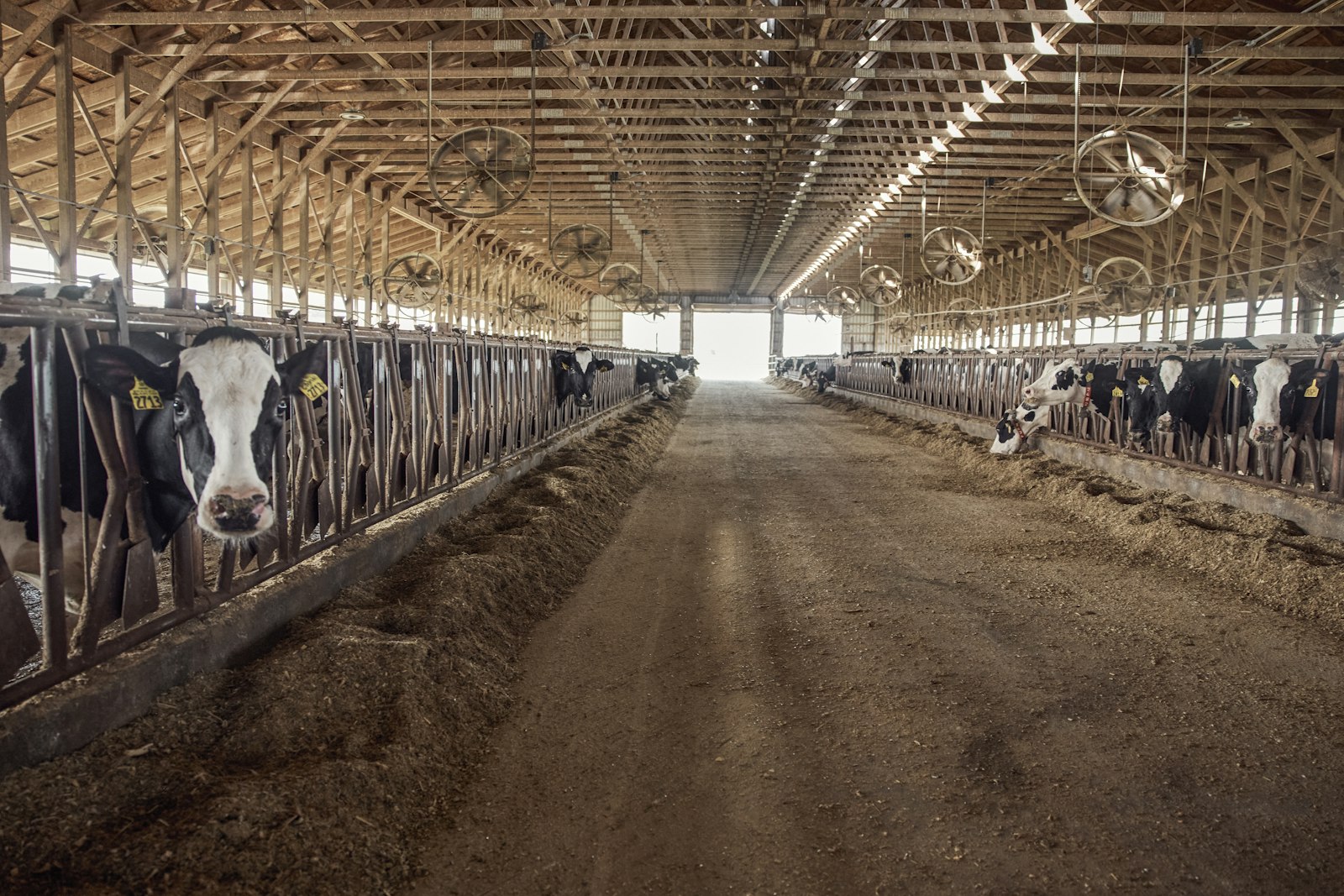
Dairy farm monitoring for parlors, bulk milk coolers, barns and troughs
Dairy farm monitoring tracks the water, electricity and cooling a farm runs on, from the milking parlor and bulk milk cooler to barn fans and water troughs. Aqueduct measures each against its own baseline, flags a cooler that is slow to pull milk down, a trough that keeps running or a fan left on, and routes the fix, with fans and pumps controlled where enabled with owner approval.
The parlor, the cooler, the barn and every trough measured, with the farm team told first.
Bulk milk coolers watched from the first litre to pickup
- Pull down time
The time each tank takes to cool milk after milking is tracked, so a weakening cooler shows early.
- Compressor energy
Run time and power are compared against milk volume and weather, so a struggling condenser stands out.
- Temperature record
Tank temperature is kept as a continuous record from milking to tanker pickup, with every excursion noted.
Parlor wash water and trough lines on one balance
- Parlor wash water
Water and hot water per milking show when a wash cycle runs long or a hose is left open.
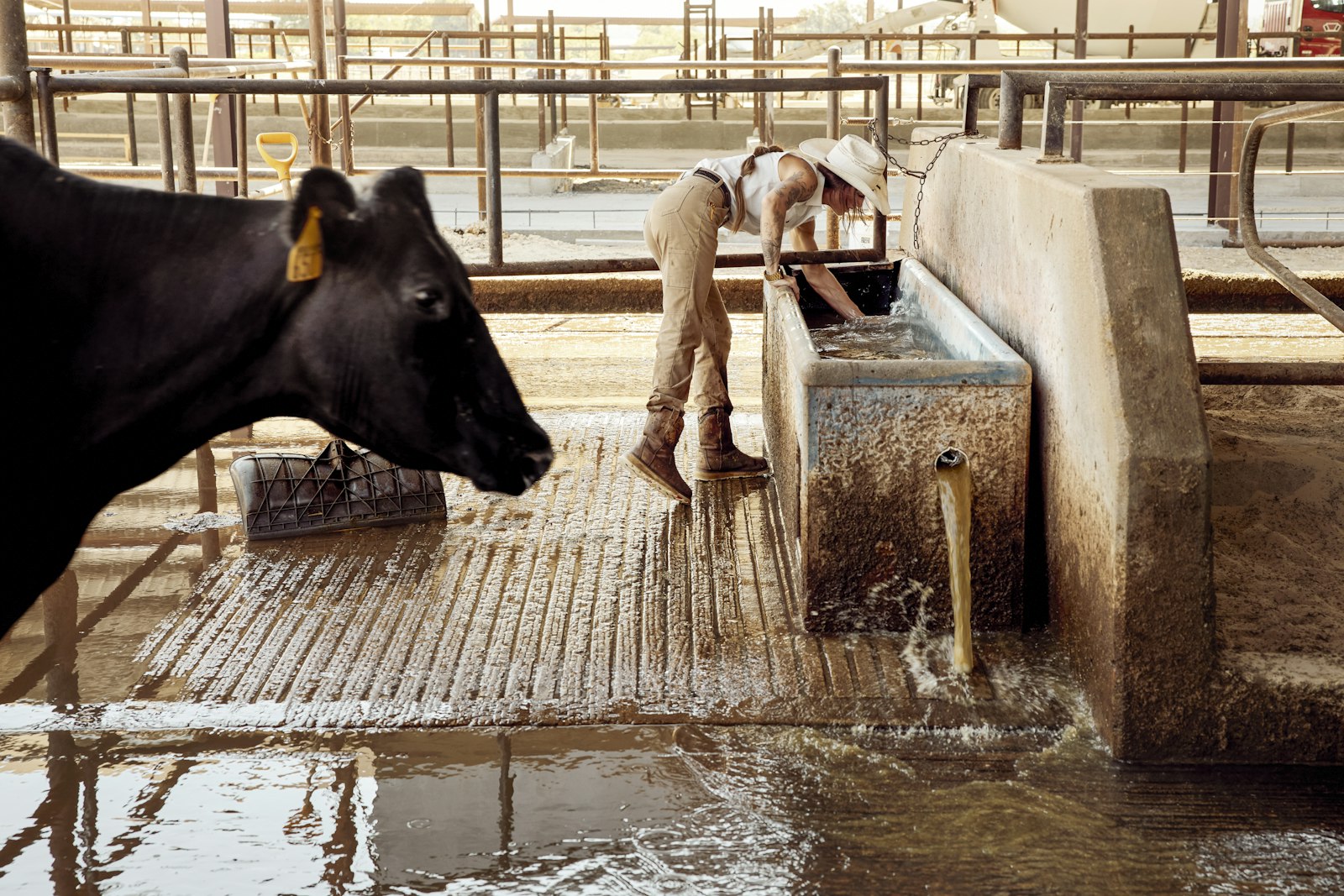
- Trough line flow
Flow to each barn line is baselined, and continuous flow at night is flagged as a probable stuck valve.
- Well and tank levels
Pump run hours and tank levels show supply problems before the troughs run dry.

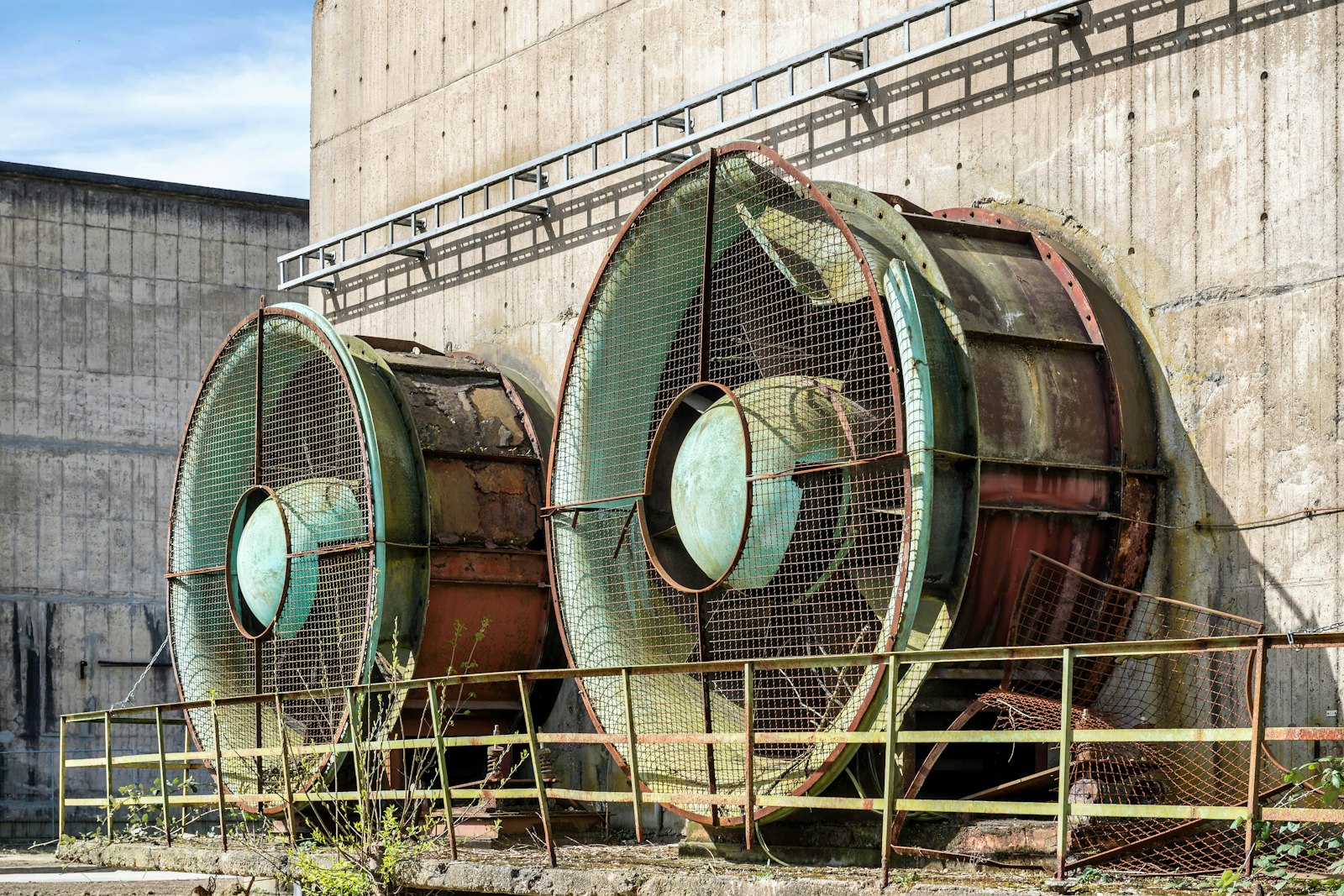
Barn fans that follow the weather, not the switch
- Temperature and humidity
Barn sensors show where conditions climb on hot afternoons and where air stays still.
- Fans on rules
Where control is enabled, with owner approval, LoRaWAN relays switch fans on temperature and humidity rules.
- Every command logged
Command history shows whether each fan did what it was told, so the farm can trust the automation.
Running a dairy farm, before and after Aqueduct
- A slow bulk tank is found when the milk is already warm.
- A stuck trough valve floods the barn before anyone notices.
- Barn fans run on a wall switch, whatever the weather.
- The farm sees one power bill and no breakdown behind it.
- Problems are found on the next walk around the farm.
 The Aqueduct way
- Slow pull down is flagged after the milking it started.
- Continuous trough flow is flagged the night it starts.
- Fans switch on temperature rules where control is enabled.
- Parlor, cooler, barns and pumps each carry their own cost.
- The farm team gets the alert, with the asset and time.
What Aqueduct watches on a dairy farm
Wireless sensors over LoRaWAN cover long distances across barns and yards, and existing meters and controllers are read where they exist.
Milking parlor
Wash water per milking, hot water use, vacuum pump and plate cooler power, read against the milking schedule.
Bulk milk coolers
Milk temperature, pull down time after each milking, compressor run time and power.
Barn ventilation
Fan status and power, barn temperature and humidity, with fans switched by LoRaWAN relays where control is enabled.
Water troughs and lines
Flow to each barn or trough line, with night flow and continuous running flagged as probable loss.
Wells, pumps and tanks
Pump run hours, power and tank level, so a pump cycling more than usual is caught early.
Manure and washdown
Washdown water and pump energy, so flushing and lagoon pumping carry their own numbers.
What goes wrong on a farm between rounds
A farm runs day and night with a small team. Most problems are found when someone walks past them.
Milk that cools too slowly
A struggling condenser or low refrigerant shows up first as slow pull down in the bulk tank, long before the alarm.
Troughs that never stop
A stuck float valve runs water around the clock and floods the area around the trough until someone notices.
Fans left on or off
Barn fans run full speed on a cool night, or stay off on a hot afternoon when cows need the air.
One meter for everything
The farm sees one electricity bill and one water source, and cannot say what the parlor, cooler or barns cost.
Healthy herds need cold milk, clean water and moving air, every hour of the day.
Talk to our teamHow dairy farm monitoring works
Monitor, Measure, Identify, Act, Verify, the same loop Aqueduct runs in a dairy plant.
Survey and connect
A wireless survey sets gateway positions. Sensors and meters go in through installation partners, and existing controllers are read where possible.
Baseline each asset
The cooler, parlor, fans, pumps and troughs each get an expected profile by milking, time of day and weather.
Flag what breaks pattern
Slow pull down, continuous trough flow and fans running against the barn temperature are flagged with the asset and the time.
Act
An alert goes to the farm team, or a ticket to your service contractor. Where control is enabled, with owner approval, fans switch on a rule.
Verify
The next milking, night or hot afternoon confirms the fix. The verified result becomes the new baseline.
Where teams put it to work
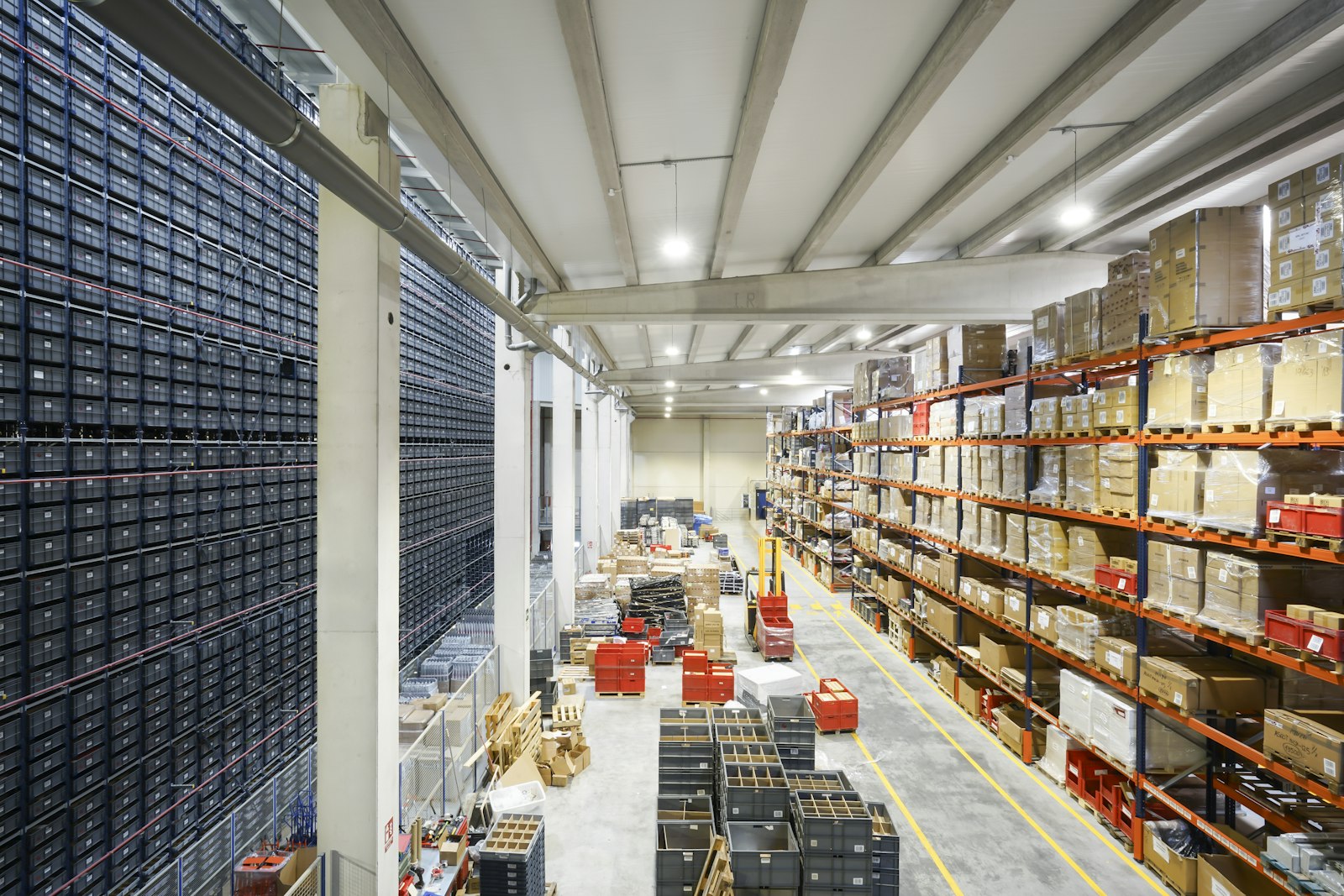
One gateway, the essentials covered
A single gateway can cover the parlor, bulk tank, main barn and trough lines, so a small team gets alerts without walking the farm at night.
Learn more
Many barns compared on one screen
Each barn and trough line is baselined, so the farm manager sees which barn is using more water or power than its herd size explains.
Learn more
Farm support guided by measured data
Member farms sit on one portfolio, so the cooperative can see which farms struggle with cooling or water and send support where it counts.
Learn moreRelated
Common questions
Most farms start with bulk milk cooler temperature and pull down time, parlor wash water, barn temperature and fan status, and water flow to troughs. Aqueduct adds the electricity behind each, so every asset has its own baseline and cost.
Measure milk temperature continuously, along with compressor run time and power. Aqueduct tracks how long the tank takes to pull milk down after each milking and flags slow pull down, which often points to a condenser or refrigeration problem before an alarm trips.
Yes, where the trough line is metered. Water that keeps flowing at night or runs continuously against its baseline is flagged as probable loss, with the line and the time it started, so a stuck float valve is found the same day.
Yes, where control is enabled, with owner approval. Fans and simple loads switch through LoRaWAN relays on rules tied to barn temperature, humidity or schedule, and every command is logged in the command history.
Not across the whole farm. LoRaWAN sensors reach long distances to a gateway, and the gateway connects over Ethernet, Wi-Fi or LTE. A wireless survey sets the gateway positions before installation.
Installation runs through partners. Aqueduct is device agnostic, so existing meters and controllers are read where they emit telemetry, and new sensors go in only where the farm is blind.
Yes. Each farm is a site on one portfolio, ranked by water and energy use per unit of milk where production data is shared, so the cooperative can see which farms need support first.
See Aqueduct on your own facility.
Bring a site, a utility bill or a question. We will show you where the loss is.