Building management system replacement: when to replace, keep or overlay your BMS
 Milvian AI teamFacilities and infrastructure intelligence
Replace a building management system when its controllers are unsupported, parts are unavailable or the vendor holds the system closed. Keep it when sequences run well and only the data is trapped, and overlay an intelligence layer to read it. In both cases, measure first, run in parallel and move one system at a time, so the building never loses control.
Why BMS replacement decisions go wrong
BMS replacement is often decided on frustration rather than evidence. The front end is slow, nobody can find the trend logs, the contractor charges for every change and the graphics still show equipment that was removed years ago. It feels like the system is the problem, so the instinct is to rip it out.
Sometimes that instinct is right. Often it is not. The controllers in the plant room may be perfectly capable of running their sequences for years. What the owner really lacks is visibility: what each system consumes, which equipment is drifting and whether the last project delivered. Replacing working controllers to get visibility is an expensive way to buy a dashboard, and every replacement carries cutover risk in an occupied building.
The opposite mistake is also common. Owners keep a system that is genuinely at end of life because replacement looks daunting, and then lose control of a plant when a controller fails and no spare exists. The right decision comes from an honest inventory, not from the sales cycle.
What a good BMS replacement or overlay must deliver
| Requirement | Why it matters | Question to ask a vendor |
|---|---|---|
| An honest inventory before any proposal | You cannot scope a replacement without knowing what controllers, points and protocols exist | Will you survey every controller and give me the point list before you quote |
| Open protocols | A closed replacement simply resets the lock-in clock | Is everything you install readable over BACnet or Modbus by another system |
| Measurement from day one | A replacement that is not metered cannot prove it improved anything | Which systems will be metered, and what baseline will you report against |
| Parallel running | Occupied buildings cannot lose control during cutover | How long will old and new run side by side, and who owns each during that time |
| Sequences proven before handover | A new controller running a bad sequence is no improvement | How will you test each sequence and show me the evidence |
| Control governance | New software must not become a new risk | What approval, lockouts and command history come with control |
| CMMS integration | Faults found must become work orders | How do findings reach my maintenance team |
| Data ownership | The building's history belongs to the owner | Can I export all historic data in an open format at any time |
Keep, replace or overlay: the three paths
- Keep and overlayFits when controllers are supported and sequences work but data is trapped. A platform reads the BMS over BACnet or Modbus, adds metering where the BMS is blind and does diagnosis and verification on top. Lowest risk and fastest result. It stops short of fixing a controller that is genuinely failing.
- ReplaceFits when controllers are unsupported, parts are scarce, the vendor holds the system closed or the building has changed so much that the sequences no longer match it. Higher cost and cutover risk, but resets the building on open protocols.
- Build inFits new construction and deep refits. Metering, sensors and control points are specified at design stage with the architect and MEP engineer, so the building is measured from the day it opens.
- HybridThe common real answer. Keep the plant room controllers that work, replace the ones that do not, and put one intelligence layer across both so the owner sees a single building rather than two systems.
How to run a BMS replacement or overlay
- Survey and inventoryList every controller, its firmware and support status, its protocol and its points. Record which systems have no measurement at all.
- Baseline before you change anythingUpload utility bills and add metering on the main systems, so you know what the building uses before the project begins.
- Decide system by systemMark each controller keep, replace or retire. Do not decide for the whole building at once.
- Overlay firstBring the existing system into the new data layer. You get visibility immediately, and you have a reference for the new controllers.
- Cut over one system at a timeRun old and new in parallel, prove each sequence, then hand over. Start with the lowest-risk system and leave critical spaces until the method is proven.
- Verify against the baselineReport the result of each change against the weather-normalized baseline, so the project has evidence rather than an estimate.
Replace or keep: a decision scorecard
| Criterion | Weight | Points toward replacement when |
|---|---|---|
| Controller support status | High | The manufacturer no longer supports the controllers or firmware |
| Spare parts | High | Spares are unavailable or come only from salvage |
| Openness | High | Points cannot be read by another system over BACnet or Modbus |
| Sequence quality | Medium | Sequences no longer match how the building is used, and changing them is impractical |
| Cyber security | Medium | The system cannot meet current IT security requirements |
| Contractor dependency | Medium | Only one contractor can make changes, and the owner has no credentials |
| Visibility | Low | Lack of data alone is rarely a reason to replace, because an overlay solves it |
Integration and data
Most BMS controllers installed in the last two decades speak BACnet, and many plant items such as meters, VFDs and chillers speak Modbus. That is what makes an overlay practical: a field device network controller can read the points the platform needs without changing the BMS configuration. Where a system is proprietary, a protocol gateway is often available, and the survey will tell you whether it is worth it.
Where the BMS is blind, add measurement directly. LoRaWAN meters and sensors install without new cabling, which matters in occupied buildings and in older ones where cable routes are hard. LoRaWAN relay switches suit simple loads. The CMMS stays where it is and receives the work, and any SCADA on water or process systems is read rather than replaced.
Compliance and reporting
A replacement project is a good moment to fix reporting. Building performance standards, ENERGY STAR benchmarking, ISO 50001 energy reviews and investor frameworks all need consistent consumption data. Ventilation and energy standards such as ASHRAE 62.1 and ASHRAE 90.1 shape the sequences the new controllers should run.
Specify the metering and the data export at the same time as the controllers, so the new system produces evidence from the day it is commissioned. The software supplies the measured data. The owner and the auditor decide what it proves.
Where Aqueduct fits
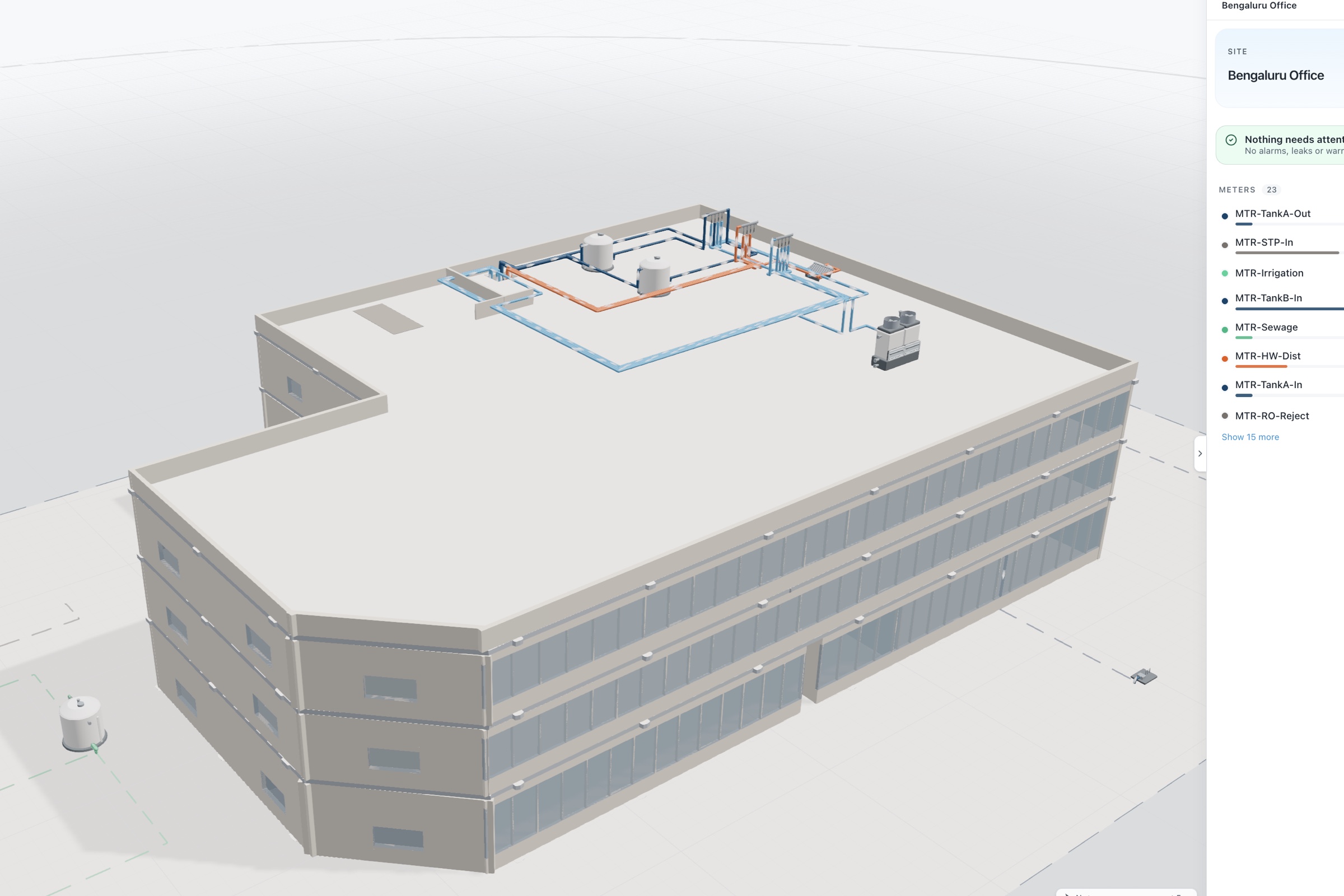
Aqueduct supports all three ways in. Keep your BMS, and Aqueduct reads it over BACnet or Modbus, adds metering and sensors where it is blind, and builds digital twins, weather-normalized baselines and fault diagnosis on top. Replace your BMS, and Smart Controls takes over schedules and setpoints through Modbus and BACnet field devices or LoRaWAN relay switches, where control is enabled, with owner approval. Build it in, and metering and control points are designed with the architect and MEP engineer.
Every command passes through lockouts that protect equipment from short cycling and is recorded in a command history that shows whether it executed. Control clusters group a unit with the sensors that inform it, so it is operated and analysed as one system. Findings route into your CMMS, and every result is verified against the baseline.